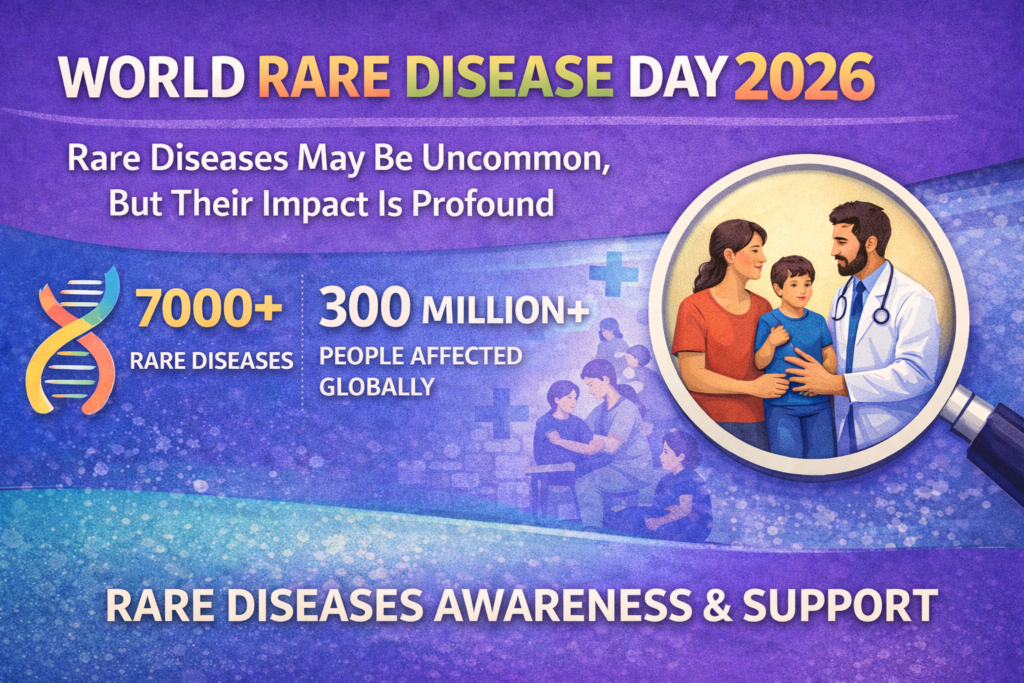
World Rare Disease Day 2026: Rare Diseases May Be Uncommon, But Their Impact Is Profound
Every year, World Rare Disease Day is observed on the last day of February to raise awareness about diseases that affect a small percentage of the population but have a significant impact on patients and their families.
In 2026, Rare Disease Day is observed on 28 February. The goal of this day is to spread awareness, promote early diagnosis, support research, and improve access to treatment for people living with rare diseases.
What Are Rare Diseases?
Rare diseases are conditions that affect a very small proportion of the population.
Although definitions may vary by country, a disease is generally considered rare if it affects fewer than 1 in 2,000 people.
Key Global Facts
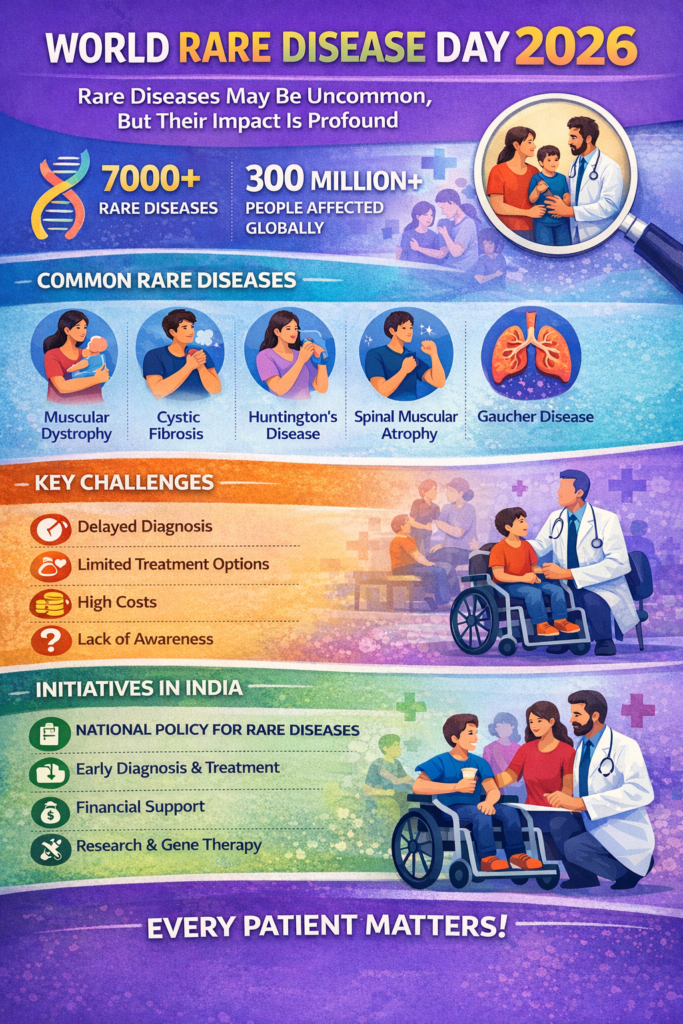
More than 7,000 rare diseases have been identified worldwide
Over 300 million people globally are affected by rare diseases
Many rare diseases are genetic in origin
Symptoms often appear in childhood
Despite their rarity individually, collectively rare diseases affect millions of people worldwide.
Examples of Rare Diseases
Some commonly recognized rare diseases include:
Muscular Dystrophy
A group of genetic disorders that cause progressive muscle weakness and degeneration.
Cystic Fibrosis
A genetic disorder affecting the lungs and digestive system, leading to thick mucus production.
Huntington’s Disease
A genetic neurological disorder that affects movement, cognition, and behavior.
Spinal Muscular Atrophy (SMA)
A condition that causes muscle weakness due to loss of motor neurons, commonly affecting infants and children.
Gaucher Disease
A metabolic disorder where fatty substances accumulate in certain organs, especially the spleen and liver.
Key Challenges in Rare Diseases
Patients with rare diseases and their families face several challenges.
Delayed Diagnosis
Due to lack of awareness, diagnosis may take years or multiple medical consultations.
Limited Treatment Options
Many rare diseases do not yet have effective treatments.
High Cost of Therapy
Some treatments, including enzyme therapy and gene therapy, are extremely expensive.
Lack of Awareness
Both the general public and healthcare systems often have limited knowledge about rare diseases.
Initiatives in India
India has taken steps to improve care for rare disease patients through the National Policy for Rare Diseases (NPRD).
Key initiatives include:
Early diagnosis and screening programs
Establishment of Centers of Excellence
Financial assistance for treatment
Promotion of research and gene therapy
These initiatives aim to improve access to care, affordability, and awareness.
Why Awareness Matters
Although rare diseases individually affect a small number of people, their collective impact is enormous.
Increasing awareness can help:
Promote early diagnosis
Encourage research and innovation
Improve patient support systems
Ensure better healthcare policies
Every Patient Matters
Rare diseases remind us that every patient deserves attention, care, and hope, regardless of how rare their condition may be.
About the Author
Dr. Sudhir Kumar Yadav
MD (Medicine)
Diabetes, Thyroid & Internal Medicine Specialist
Bareilly, Uttar Pradesh